





Can I Get Eco-Friendly or Sustainable Event Badges?
A badge may be used for only a day or two, yet every attendee, exhibitor, speaker and member of staff may receive one. At a large conference, a small design decision is multiplied hundreds or thousands of times. That makes badge size, construction and collection worth reviewing as part of the event’s wider waste plan. The most credible approach is practical: reduce unnecessary material first, select components with documented credentials, and plan what will happen after use before placing the order.
Badge Wave supplies a range of event badge formats for direct thermal and inkjet printing. The right option depends on the information the badge must carry, the chosen printer and the way it will be worn. Sustainability should be assessed alongside readability, reliable printing and event-day usability rather than treated as a separate marketing claim.

Define what sustainable means for your event
There is no single badge that is automatically the most sustainable in every situation. A paper-based badge can still create unnecessary waste if it is oversized, over-ordered, laminated without need or combined with a disposable holder. A reusable holder may be sensible when it can be collected and used repeatedly, but less helpful when most holders leave the venue. The relevant question is therefore not simply ‘What is this badge made from?’ It is ‘What is the lowest-waste system that will work for this event and its available disposal routes?’
Set a short hierarchy before comparing products. First, prevent material that is not needed. Second, reuse components where a reliable return system exists. Third, select responsibly sourced or recyclable materials with evidence. Finally, make collection and disposal easy enough that attendees and venue teams can follow the plan. This keeps environmental decisions connected to real behaviour rather than claims printed on a procurement document.

Reduce material before changing material
Reducing the amount used is often the simplest improvement because it avoids material regardless of how that material would otherwise be processed. If a 4" × 3" finished badge can clearly display the attendee’s name, organisation, role and QR code, choosing it instead of a 4" × 6" format can substantially reduce the badge area placed into circulation. Across 1,000 delegates, moving from 24 square inches per badge face to 12 square inches halves the finished face area, although the exact amount of stock saved depends on the badge construction and how it is produced.
A smaller badge is not automatically the right answer. A 4" × 6" badge may be justified when the design needs a large agenda, access information, sponsorship, a headshot or improved visibility from a distance. The decision should therefore begin with required content, not a preferred template. Remove duplicated instructions, unnecessary promotional panels and information that belongs in the event app. Test the smaller layout using the longest realistic names and company details before approving it.
Badge Wave’s guide to printing exhibition badges efficiently explains that a 4" × 3" badge can suit simpler networking events where only essential identification and a QR code are required. Organisers can also reduce waste by avoiding an additional insert when a double-sided design can hold the genuinely necessary information, or by choosing a direct attachment format when a separate plastic holder is not operationally required.
Examine the badge, attachment and print process together
A badge is part of a system. Card or adhesive stock, holes or slots, clips, lanyards, holders, printing and packaging all contribute to the final material footprint. Review each component separately and ask whether it is required. For example, a card badge with an appropriate slot may attach directly to a lanyard, while another event may need a holder because badges must be protected or exchanged throughout a multi-day programme.
Review the available badge accessories with the return plan in mind. Reuse works only when collection points are visible, staff know what to separate and somebody is responsible for storage after the event. Avoid describing a lanyard or holder as reusable if there is no practical system for getting it back.
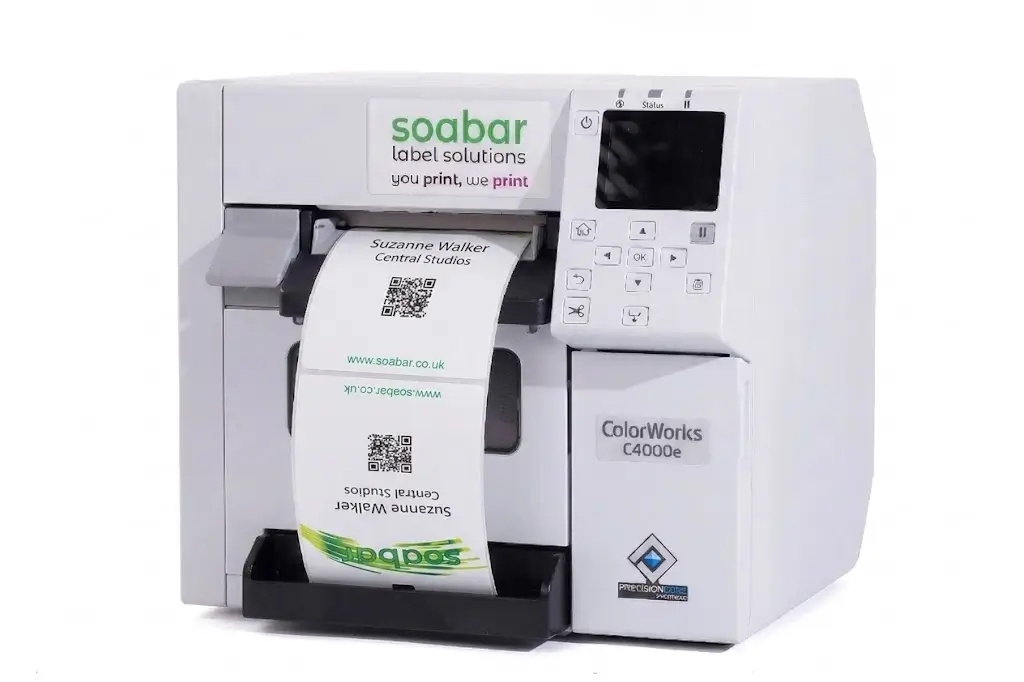
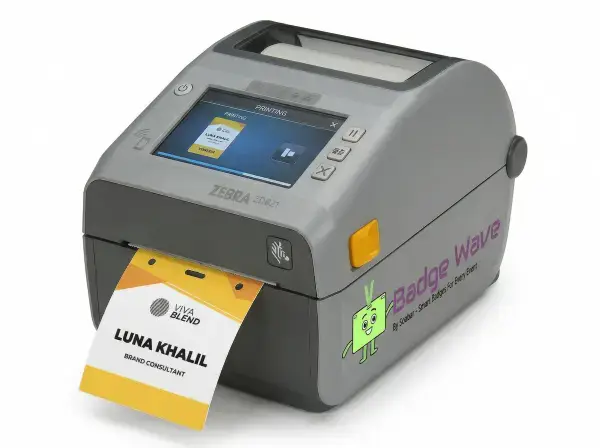
Printing method matters too, but it should not be reduced to a simplistic ‘thermal is green’ or ‘inkjet is green’ statement. Direct thermal printing does not require an ink ribbon or toner for the variable information, while inkjet enables full-colour on-site output. Both methods require compatible coated stock and equipment. Select the method that produces the required result reliably, then reduce test waste through approved templates, correct printer settings and a controlled reprint process.
Ask suppliers for evidence, not vague claims
Terms such as green, eco-friendly, biodegradable and recyclable can mean very different things. Ask the supplier to explain the claim in writing and identify the part of the product to which it applies. Useful evidence may include the material composition, percentage of recycled content, responsible-forestry certification, technical data, relevant test standards and precise disposal guidance. Badge Wave states that its printed 4" × 3" direct thermal card badges use FSC™-certified materials; that is a specific, checkable claim about responsible forest management rather than a general promise about the whole event.
Also ask about elements that can change the disposal route: coatings, laminates, adhesives, release liners, RFID inlays, magnets, clips and mixed-material holders. Confirm whether components must be separated and whether the organiser’s local waste contractor accepts them. A recycling symbol alone does not prove that the complete badge will be collected or processed in the location where the event takes place.
A useful supplier enquiry includes: What is the badge made from? Which certification applies, and to which component? Is recycled content measured by weight? Are coatings or adhesives present? Can the badge enter ordinary paper recycling, or does it require a specialist route? What should happen to the liner or attachment? Can supporting documentation be supplied? Clear answers allow the organiser to make accurate statements to attendees and sustainability teams.
Design a workable end-of-event collection route
End-of-life planning should happen before the badges arrive. Speak to the venue and waste contractor about the intended materials, because collection rules differ. Decide whether badges, lanyards and holders will be returned together and separated later, or collected in different containers. Place return points where people naturally leave, such as exits, cloakrooms and registration desks. Use plain instructions that state exactly what belongs in each container.
Collection needs ownership. Assign a person or supplier to empty containers, separate components, record quantities and arrange the next step. If reusable holders or lanyards are being collected, inspect and store them so they are genuinely available for the next event. If confidential or personal information appears on the badge, include secure handling in the process rather than placing identifiable badges in an unattended public bin.
Order accurately and control on-site waste
Over-ordering creates avoidable waste, but ordering too tightly can leave the registration team without stock for walk-ins, corrections and damaged badges. Use current registration data, expected late bookings and previous event history to set a justified contingency quantity. Badge Wave’s published minimum order is 250 badges, allowing for setup, testing and last-minute registrations, so smaller events should discuss the appropriate configuration before ordering.
If variable details will be printed at registration, compare on-site badge printers and confirm media compatibility before production. Use final templates for testing, train staff to correct records before printing and restrict unnecessary reprints. These operational steps are relevant to sustainability because every failed setup, duplicate record and accidental print becomes immediate waste.
Measure progress and communicate accurately
A reprint must preserve the correct role label and access mapping, including during a printer or colour fallback. Treat this as a specification question, since a visually attractive option can still fail if it does not work in the intended registration environment. Assign a person to the decision made and its acceptance check. Without ownership, teams may use different versions or make inconsistent corrections under pressure.
Keep approved templates and sufficient compatible stock available for each operational category. Use realistic names, roles, records, artwork and equipment rather than a perfect demonstration sample. Reprint one record from every group during rehearsal. Record who approved the result and which version was tested to prevent an earlier draft returning at venue setup.
Brief staff and exhibitors
Record simple figures that can improve the next event: badges ordered, badges issued, unused stock, reprints, items collected and components reused or sent to an accepted recycling route. Even an approximate count is more useful than an unsupported claim that the event was ‘zero waste’. It can reveal whether the badge was oversized, the contingency stock was excessive or collection points were poorly positioned.
Public wording should match the evidence. ‘Made from FSC™-certified card’ is different from ‘recycled’, and ‘recyclable where facilities accept this material’ is different from ‘will be recycled’. Avoid claiming the whole badge is plastic-free, compostable or recyclable unless every relevant component and local route has been checked. Transparent, limited claims build more trust than broad language that cannot be demonstrated.
A practical lower-waste badge checklist
List only the information the physical badge must display.
Test whether a 4" × 3" format is sufficient before choosing 4" × 6".
Remove unnecessary holders, inserts, laminates and duplicate printed items.
Request material composition, certification and disposal evidence.
Confirm what the venue or waste contractor will actually accept.
Plan visible return points and assign responsibility for collected items.
Order a justified contingency quantity and control reprints.
Measure unused, reprinted, collected and reused items after the event.
Plan a more considered badge specification
Share your event date, expected attendance, required badge information, preferred size, printing method and collection goals with Badge Wave. The team can help you customise an event badge that balances presentation, reliable on-site use and a credible lower-waste plan. For product-specific evidence or disposal questions,
contact Badge Wave before publishing environmental claims.
Some card formats may be recyclable, but the correct route depends on the complete construction, coatings, adhesive, attachments and the facilities available locally. Confirm the specific product and disposal route before making a claim.
It uses less finished face area when the construction is comparable, so it can reduce material at scale. Choose it only when essential information remains readable and the badge still performs its event function.
Not necessarily. FSC certification relates to responsible forest management and chain of custody; it should not be presented as proof of recycled content unless separate evidence confirms that claim.
Yes, when the event has a reliable collection, inspection, cleaning where appropriate, storage and redistribution process. Calling an item reusable is not enough if it is unlikely to be returned.
Request written material specifications, applicable certifications or test evidence, details of coatings and adhesives, separation requirements and disposal instructions. Then confirm the proposed route with the venue or waste contractor.