




What Size Should I Choose for Event Passes?
For most UK conference and exhibition passes, 4 × 3 inches (about 102 × 76 mm) is a practical compact format for a name, company, role and QR code. Choose 4 × 6 inches (about 102 × 152 mm) when the pass must carry larger text, a timetable, a map, more prominent sponsor branding or multiple access fields. The best size is the smallest one that keeps essential information readable after the pass is worn and scanned, not merely the size that looks best on screen.
Badge Wave supplies event badge formats including 4 × 3-inch and 4 × 6-inch card and adhesive options. Sizes refer to the visible finished format; a double-sided, fold-over construction can start as a larger flat piece.

Compare the common event pass sizes
4 × 3 inches: compact, quick to read
This size generally suits networking events, visitor identification, smaller conferences and short events where first name, surname, organisation and an attendee category take priority. It is lighter and easier to wear, but space fills quickly if you try to add a large sponsor logo, access matrix and QR code together. Prioritise the wearer's name rather than shrinking everything to fit.

4 × 6 inches: room for more than identification
The larger format is better suited to trade exhibitions, multi-track conferences, staff accreditation and events with useful information on the reverse. A 4 × 6 pass can separate a large readable name and role from a QR code or a simple event schedule. Extra space does not justify clutter: the front should still answer “Who is this?” and “What is their role?” in a glance.
4 × 12 inches: the unfolded stock behind a folded pass
Some 4 × 6-inch double-sided event passes begin as 4 × 12-inch stock that folds into a finished 4 × 6-inch pass. Badge Wave describes this as a common event format in its FAQ. Do not confuse the flat-feed length with the final pass visible on a lanyard. Confirm the finished dimensions, fold direction, slot position and printer feed with the approved product template.
Choose dimensions based on what people must do with the pass
Start with the reading task. A conference delegate normally wants names legible at conversational distance. Registration staff may need to scan a QR code quickly. Security might need to identify roles from a few paces away. Each use case competes for physical space, so decide which function wins before building the artwork.
Print three full-size paper mock-ups with the longest attendee name and company on your list. Hang them at the intended lanyard length. Try reading them in typical venue lighting, then scan the code with the devices that will actually be used. A design that looks balanced in a browser may be far too small when worn at chest level.
Do all printers support the same badge size?
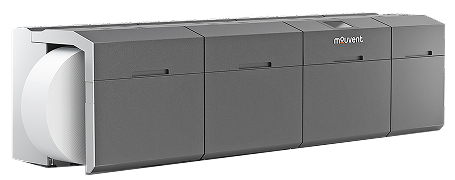
No. Printer compatibility depends on media width, length, thickness, feed method, coatings and die-cut layout. Badge Wave states that its typical on-site printer setup accepts media up to approximately four inches wide; this is a width, not a promise that every length or stock construction will feed correctly. The Zebra ZD621 is designed for compatible direct thermal stock, while Epson inkjet badge printers need suitable inkjet-coated media.
Always check the individual badge SKU and product template rather than selecting media purely because it has the right dimensions. Fold lines, perforations and adhesive constructions can affect both printing and final appearance.
Plan the reverse side before ordering
A reverse-side programme, floor plan, emergency information or exhibitor instructions may justify a larger folded pass. Keep variable data such as names away from the fold and attachment area. If the front and back need different personalisation, confirm whether your print workflow supports it or whether the static reverse should be pre-printed. The customisation service is the sensible starting point for a bespoke layout.
Not necessarily, but choose it for a clear purpose such as a timetable or high-visibility role. A 4 × 3 pass often provides enough space for basic identification.
A larger format gives you more room, but the scanning platform's minimum print size, quiet zone and contrast requirements still govern the design. Test real print samples.
Not without checking. Both may share a finished size while using different folds, margins, coatings and feed constructions.
Share the intended finished size, fields, printer model and attachment style with Badge Wave. Ask for help choosing event pass stock and request the correct artwork template before signing off the design.