



What Is the Difference Between the Zebra ZD621 and Epson C4000 Badge Printers?
Both printers can support professional on-site badging, but they are not interchangeable. The Zebra uses heat-sensitive media and does not need ink, toner or a ribbon for variable output. The Epson uses four individual ink cartridges on coated inkjet stock. Both can add attendee-specific information to pre-printed full-colour badges, which means the choice is not simply black-and-white badge versus coloured badge. It is black variable layer versus full-colour variable layer, together with speed, resolution, consumables, connectivity and workflow.
Compare the Badge Wave product page for the Zebra ZD621 badge printer with the Epson product specification using the same event requirement and badge format.

Printing technology and output
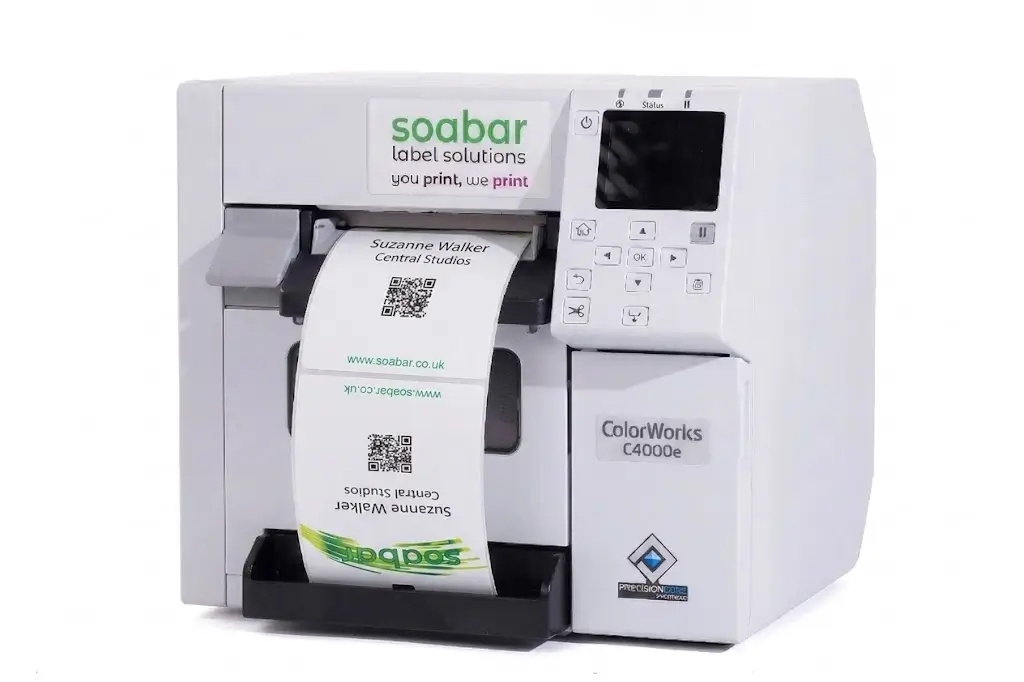
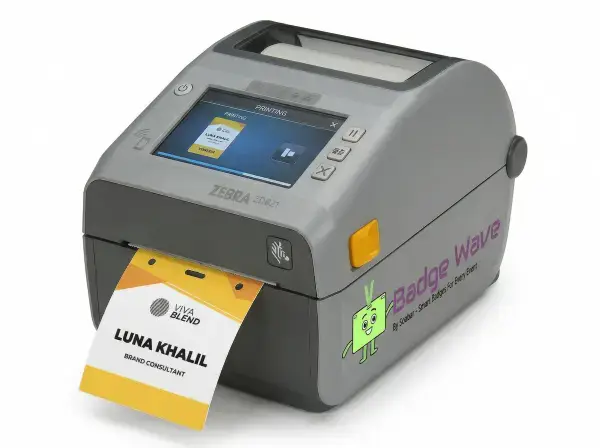
The ZD621 uses direct thermal technology for single-colour output, while the Epson C4000e uses PrecisionCore inkjet technology with CMYK pigment inks. This is the central decision behind printing technology and output, because it determines what the attendee sees and what the registration team must deliver under pressure. Define the required result before comparing products, then separate essential functions from preferences that can change. This prevents a visual choice from creating an operational conflict later.
Choose Zebra when names and codes can be black; choose Epson when variable images or colours have a defined purpose. Use realistic names, roles, records, artwork and equipment rather than a perfect demonstration sample. Print the same representative records through the proposed workflow. Document the approved result so every station starts from the same configuration.

Speed and registration throughput
Badge Wave lists Zebra print speed up to 203 mm per second and Epson maximum speed up to 100 mm per second at a stated quality setting. The heading is practical rather than theoretical: the organiser needs a choice that works with the badge stock, data and event-day process. Consider the people, data and equipment involved at this exact stage. A decision is useful only when the team can apply it consistently during setup and live registration.
Treat these as printer specifications, not badges or attendees per hour. Use realistic names, roles, records, artwork and equipment rather than a perfect demonstration sample. Time lookup, verification, printing, assembly and handover for both candidate systems. Include exceptions as well as the normal attendee journey, because they usually expose the hidden delay or layout failure.
Resolution and variable imagery
The Epson is listed at up to 1200 × 1200 dpi and is intended for detailed colour graphics, while Zebra focuses on clear thermal text, graphics and codes. Treat this as a specification question, since a visually attractive option can still fail if it does not work in the intended registration environment. The specification should state what success looks like and what would make the option unacceptable. That gives artwork, registration and venue teams the same decision rule.
Specify whether headshots, changing logos or high-resolution colour are truly required at check-in. Use realistic names, roles, records, artwork and equipment rather than a perfect demonstration sample. Inspect physical samples at wearing distance and scan every code. If the result fails, change the specification before production rather than asking event staff to compensate manually.
Consumables and routine operation
Zebra's thermal process avoids ink and toner, while the Epson includes individual inks and a maintenance box that require monitoring and replacement. The best answer depends on the event requirement, but the relevant factors can be defined and tested before an order is approved. Resolve this point before dependent work is approved. Late changes can affect templates, stock allocation, staff instructions and the reliability of earlier testing.
Plan supplies, storage and staff actions for the selected model. Use realistic names, roles, records, artwork and equipment rather than a perfect demonstration sample. Perform a consumable change and recovery during rehearsal. Repeat this check whenever the relevant artwork, stock, data or equipment changes.
Media compatibility
The Zebra printer requires suitable direct thermal badge stock and Epson requires inkjet-coated media; dimensions alone do not make the products interchangeable. This is the central decision behind media compatibility, because it determines what the attendee sees and what the registration team must deliver under pressure. Use the event's real scale and attendee journey, not a generic best practice detached from the venue. A small meeting and a peak-arrival exhibition may need different answers.
Order the exact stock specified for the printer and badge construction. Use realistic names, roles, records, artwork and equipment rather than a perfect demonstration sample. Calibrate repeated feeds and inspect alignment across a meaningful batch. Use the outcome to set the staffing, stock or artwork rule for this event rather than relying on an assumed universal answer.
Connectivity and integration
Badge Wave describes Zebra compatibility with Windows, Android and iOS devices, while Epson lists drivers for ESC/Label, Linux and Mac plus SDK options for iOS and Android. The heading is practical rather than theoretical: the organiser needs a choice that works with the badge stock, data and event-day process. Keep the choice proportionate to its purpose. Additional fields, colours, devices or process steps should remain only when they solve a defined attendee or operational need.
Confirm the exact operating system, connection and application with the event software provider. Use realistic names, roles, records, artwork and equipment rather than a perfect demonstration sample. Print from the production check-in device, not a separate test computer. Keep a reference sample with the event kit so operators can distinguish correct output from a developing fault.
Physical operation and portability
The Zebra is positioned as a compact, fast device and lists optional battery capability; Epson offers a compact colour platform with a 2.7-inch display and auto cutter. Treat this as a specification question, since a visually attractive option can still fail if it does not work in the intended registration environment. Assign an owner for the decision and its acceptance check. Without ownership, teams may use different versions or make inconsistent corrections under pressure.
Map desk space, power, cables, stock loading and operator access. Use realistic names, roles, records, artwork and equipment rather than a perfect demonstration sample. Build and work at a full station before choosing the final layout. Record who approved the result and which version was tested to prevent an earlier draft returning at venue setup.
Which printer fits which event
Zebra is normally the efficient choice for pre-printed branding plus black variable identification; Epson earns its additional complexity when changing colour content improves the badge. The best answer depends on the event requirement, but the relevant factors can be defined and tested before an order is approved. Include the fallback in the design rather than adding it after a failure. The alternative must preserve essential identity, access and registration functions.
Create a must-have specification and reject features that do not serve it. Use realistic names, roles, records, artwork and equipment rather than a perfect demonstration sample. Approve the model after a full timed workflow and fallback test. Run the fallback immediately after the main test and confirm that it preserves the essential function.
Zebra versus Epson comparison checklist
Variable black or full-colour output is decided.
Required image detail and code quality are tested.
Compatible thermal or inkjet stock is selected.
Engine speed is separated from check-in throughput.
Consumables and maintenance are budgeted.
Operating system and software integration are confirmed.
Station space, power and connectivity are planned.
Production samples pass physical and scanning checks.
What to record in the approved event brief
The final brief for Zebra ZD621 vs Epson C4000 badge printer should state the decision reached under printing technology and output, the operational rule agreed for speed and registration throughput, and the acceptance check used for resolution and variable imagery. It should also identify the owner of consumables and routine operation, the production or configuration version that passed testing, and the date after which changes require another approval. Include the relevant event date, in-hand date, expected attendance, peak arrival pattern, badge size and construction, printer model, stock reference, software or data source, attachment and delivery location. Record the edge cases used in testing, who may edit attendee records or authorise reprints, and the fallback that applies if the normal route is unavailable. This written brief gives design, registration, venue and supplier teams one source of truth. It also prevents a late request from quietly changing an assumption that earlier artwork, capacity or scanning tests depended on. After the event, compare the approved brief with actual queue, reprint, stock and support results so the next specification improves from evidence rather than memory.
The Zebra ZD621 is the more direct fit for fast single-colour names, organisations and barcodes.
The Epson C4000e is designed for high-resolution full-colour variable images such as headshots.
No. It uses heat-sensitive direct thermal stock and requires no ink, toner or ribbon for variable printing.
Yes. Fixed colour artwork can be pre-printed, with the printer adding variable information on site.
That cannot be concluded from engine speed alone. Test the complete lookup, verification, print, assembly and handover workflow.