




The Technology Behind Great Exhibition and Event Badge Printing
When attendees collect their badges at registration, they're rarely thinking about the sophisticated technology and processes that created them. Yet behind every crisp, professional event badge lies a complex interplay of cutting-edge printing technology, material science, colour management systems, and precision engineering. Understanding what actually makes badge printing "great" from a technical perspective reveals why choosing the right printing partner matters so much.
Several factors combine to deliver exceptional results, each playing a critical role in the final product that your attendees will wear throughout your event. At BadgeWave, we consider them all.
Print Resolution: The Foundation of Clarity
Print resolution, measured in dots per inch (DPI), determines how sharp text and images appear on your badges. High-resolution printing ensures that even small text is crisp and that logos and graphics are reproduced with fine detail.
For event badges, resolution matters at every level. Attendee names must be instantly legible from conversational distance. Company logos need to reproduce faithfully, maintaining the integrity of carefully designed brand marks. QR codes and barcodes must be printed with sufficient precision to scan reliably under various lighting conditions and from different angles.
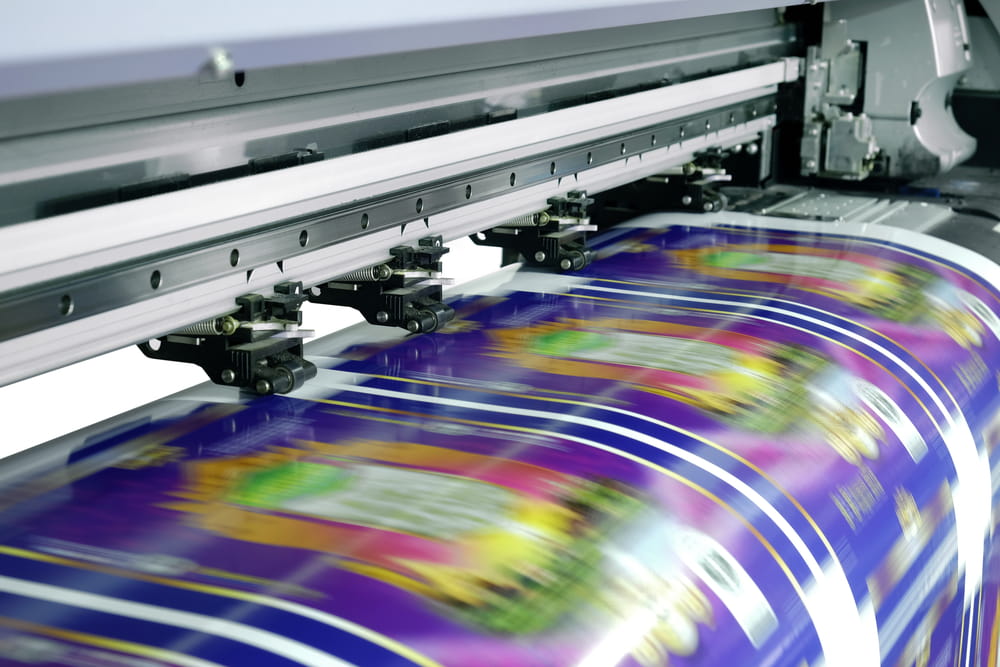
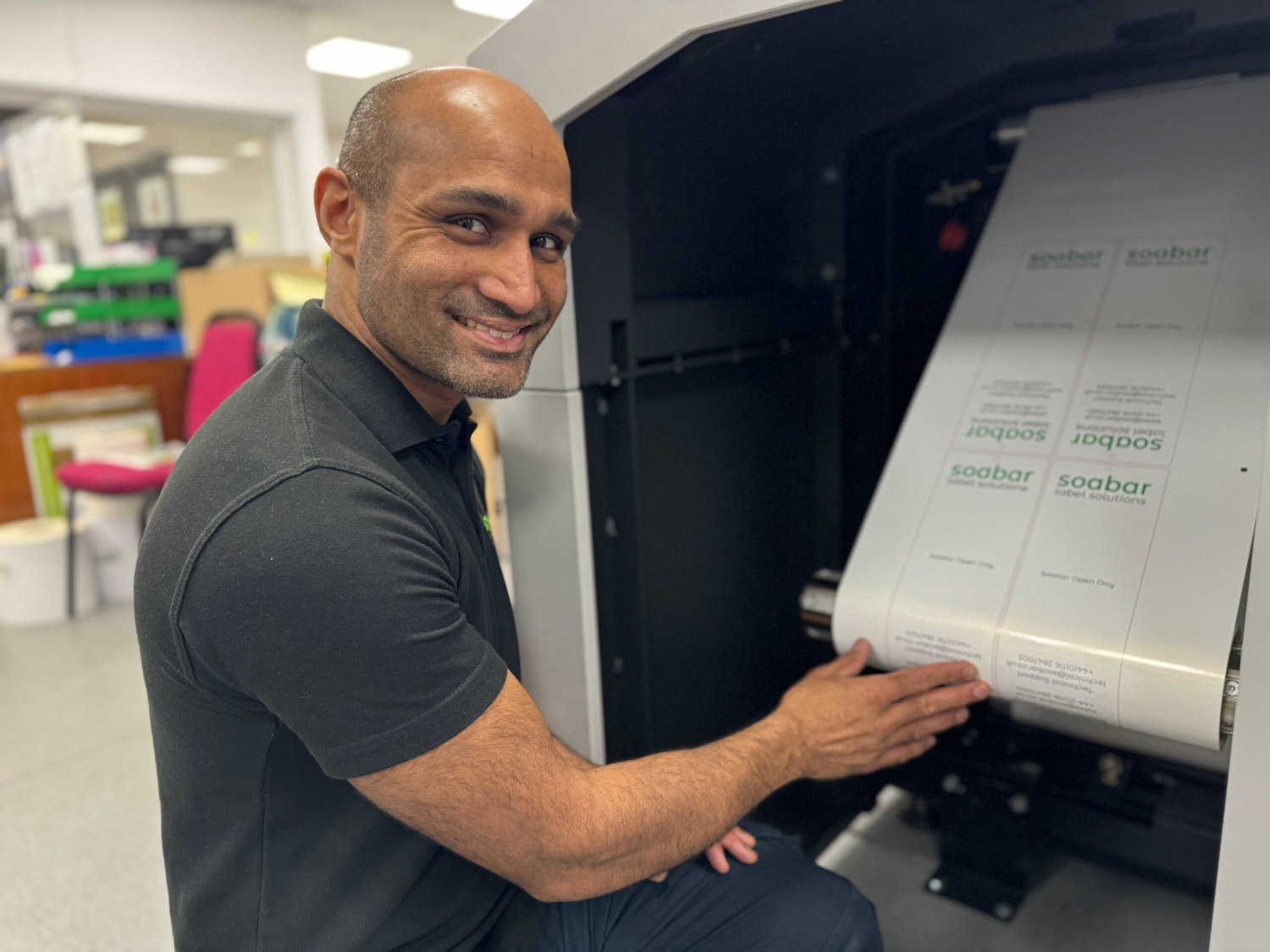
Modern digital label presses used for event badge printing typically operate at resolutions of 1200 DPI or higher, far exceeding the capabilities of standard office printers. This high resolution ensures that even fine details—the subtle curves in serif fonts, the intricate elements within complex logos, the precise edges of colour blocks—are reproduced with absolute clarity.
The difference is immediately apparent when comparing professionally printed badges to those produced on standard office equipment. Fine text remains sharp and readable rather than appearing fuzzy or pixelated. Graphic elements maintain their intended impact. Barcodes scan on the first attempt rather than requiring multiple tries or manual intervention.
For photo badges, resolution becomes even more critical. A high-resolution print ensures that facial features are clearly defined, making photo badges genuinely useful for security purposes rather than merely decorative. Low-resolution photo printing creates blurry, indistinct images that defeat the entire purpose of photo identification.
Colour Management and Calibration: Achieving Perfect Consistency
Colour management and calibration ensure that colours are accurate, consistent, and vibrant across every badge in your run, whether you're printing 50 or 5,000.
This consistency is far more complex than it might appear. Every element of the printing process affects colour reproduction—the digital file preparation, the printing technology, the ink or toner formulation, the substrate material, and even environmental factors like temperature and humidity.
Professional badge printing operations use sophisticated colour management systems that control every variable in this chain. Colour profiles ensure that what appears on screen matches what emerges from the printer. Regular calibration keeps the printing equipment performing to exact specifications. Quality control processes verify that badge number 4,783 looks identical to badge number 1.
For event organisers, this technical precision translates to brand consistency. When your event's signature navy blue is specified in your brand guidelines, professional printing ensures it appears as that exact shade on every single badge—not slightly purple on some, slightly green on others, or faded throughout the run. When sponsors provide logos with specific Pantone colours, those colours are reproduced accurately, demonstrating respect for their brand standards.
Advanced printing presses like the Bobst Mouvent LB702-UV and Konica Minolta AccurioLabel 230, that we proudly use at BadgeWave, incorporate sophisticated colour management systems that monitor and adjust colour output in real-time. These systems can detect minute variations and make instant corrections, maintaining perfect colour consistency across thousands of badges.
Material Quality: The Unsung Hero of Badge Performance
Material quality affects durability, appearance, and how badges wear throughout an event day. Premium card stocks resist curling, tearing, and showing wear, maintaining a professional appearance from morning until evening.
The choice of substrate—the material on which badges are printed—dramatically impacts the final product's performance. Standard office paper or lightweight card simply cannot withstand a full day of event conditions. Badges need to survive being handled repeatedly, exposed to varying temperatures and humidity levels, potentially getting slightly damp from condensation or weather, and generally being worn continuously for hours.
Premium synthetic materials and high-quality card stocks are engineered specifically for these demands. They resist moisture, maintain their shape and lie flat against clothing, and provide a substantial feel that communicates quality. The surface coatings on these materials are optimised for ink adhesion and colour vibrancy while protecting the printed surface from smudging and wear.
Material selection also affects printability. Different substrates interact differently with various printing technologies. UV-curable inks require substrates that allow proper ink adhesion and curing. The Bobst Mouvent's UV technology, for instance, works optimally with materials designed to cure instantly under UV light, creating durable, scratch-resistant prints that are ready for immediate finishing.
Thickness and weight matter too. Materials that are too thin feel cheap and flimsy, while those that are too thick can be uncomfortable to wear or difficult to process through finishing equipment. Professional badge printers stock a range of materials in optimal weights, selecting the best option for each event's specific requirements.
Environmental considerations increasingly influence material selection as well. Many modern badge materials incorporate recycled content or are fully recyclable, allowing event organisers to meet sustainability goals without compromising on quality or performance.
Finishing Quality: The Details That Define Professionalism
Finishing quality determines how badges are cut, whether they have clean edges, and how well additional elements like lanyards or clips are attached.
Even perfectly printed badges can be undermined by poor finishing. Rough-cut edges look unprofessional and can catch on clothing. Inconsistent die-cutting creates badges of slightly varying sizes. Poorly attached accessories fail during the event, creating operational headaches.
Professional badge finishing employs precision die-cutting equipment that creates perfectly smooth edges and maintains exact dimensions across every badge. Rounded corners are uniformly consistent. Holes for lanyard attachments are positioned precisely and punched cleanly. If badges require special shapes or custom die-cuts, these are executed with exacting accuracy.
The integration of additional elements—lanyard slots, clips, magnetic fasteners, or protective pouches—requires specialised equipment and expertise. These components must be attached securely enough to survive a full event day while being applied in a way that doesn't damage the printed surface or affect the badge's appearance.
For events requiring special features, finishing capabilities become even more critical. RFID chips must be precisely positioned and securely embedded. NFC tags need to be placed for optimal reading performance. Foil accents or spot UV coatings must be registered perfectly with the underlying print.
Modern finishing equipment like the ABG Digicon 3 used at BadgeWave allows for these complex operations to be performed in-line with printing. This maintains efficiency while ensuring perfect registration and quality. The investment in professional finishing equipment is substantial, but the results are immediately apparent in the polished, professional appearance of the final badges.
On-Site Personalisation: Complete Your Badge Solution
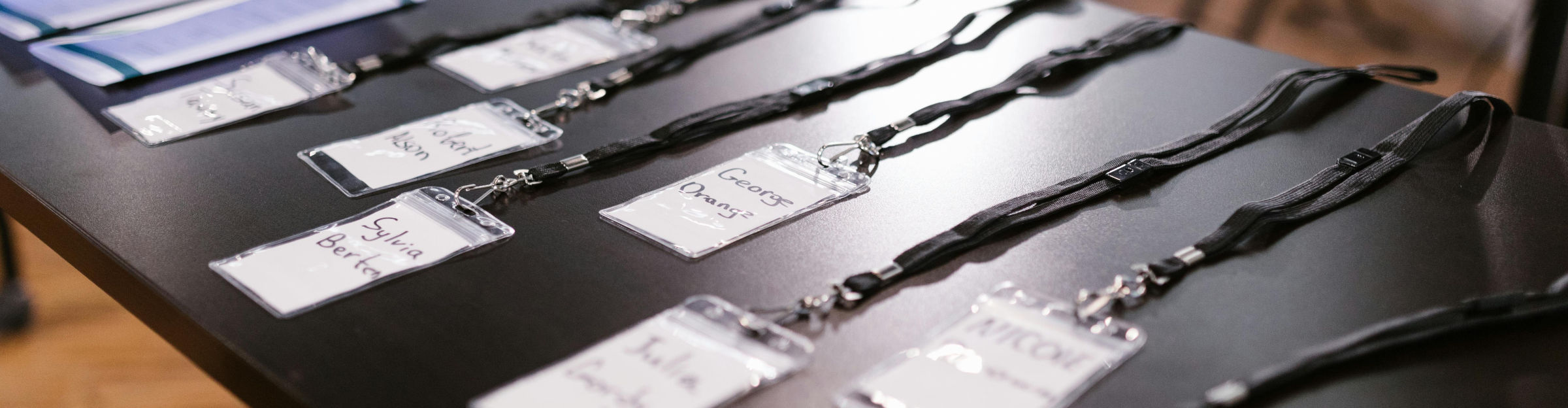
In addition to the full-colour event badges that we supply at BadgeWave, we give you the option to print variable information—attendee names, companies, job titles, and access codes—on-site using printing machines that integrate seamlessly with your pre-printed badges.
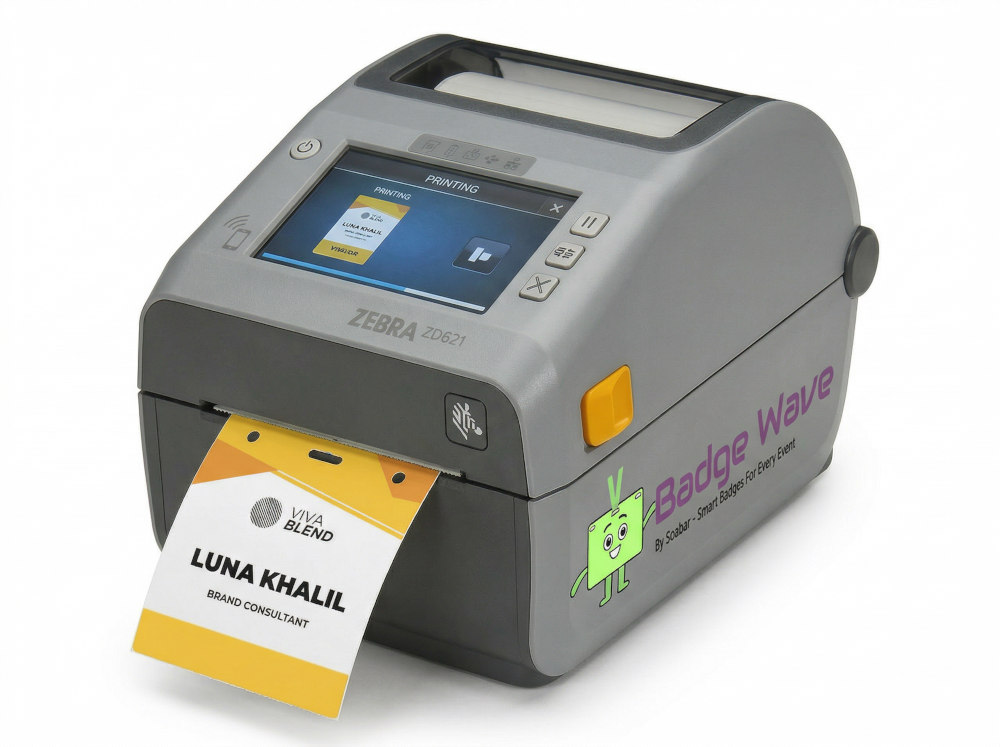
We offer two proven printing technologies to match your needs. The Zebra ZD621 uses direct thermal technology to print single-colour variable information quickly and cost-effectively, with no ink or toner to replace. This reliable printer is ideal for adding black text and barcodes to your full-colour badges, delivering fast operation and simple maintenance. The Epson ColorWorks CW4000 brings full-colour inkjet capabilities for events requiring colour-coded access levels, attendee photographs, or additional branding elements in the personalised section, offering maximum flexibility when colour serves a functional or branding purpose.
By combining our professionally printed full-colour badges with on-site personalisation equipment, you gain exceptional quality where it matters most—your event branding produced on our advanced digital presses—alongside the flexibility to add variable information using technology suited to your specific requirements.
The Cost of Cutting Corners
It's tempting to view badge printing as a cost centre where savings can be found, but cutting corners on badge quality often proves to be a false economy. The hidden costs of poor printing include:
Extended check-in times due to scanning failures and illegible information. When barcodes don't scan reliably or attendee information is difficult to read, registration queues grow longer and frustration mounts. Staff require more time per check-in, potentially necessitating additional personnel to manage the flow. These delays create a negative first impression that colours the entire event experience.

Reprinting costs when badges fail or look unprofessional. Low-quality materials tear, curl, or show wear within hours. Poorly attached accessories fall off. Faded printing becomes illegible. All of these failures necessitate reprints, which consume additional materials, staff time, and resources—often under pressure during the event itself when quick solutions are most difficult and expensive.
Damage to brand perception and attendee satisfaction. Attendees form judgments about event quality based on every touchpoint, and badges are one of the most visible and tactile. Cheap-looking, poorly printed badges suggest that the organisers don't value quality or professionalism. This perception can undermine confidence in other aspects of the event and reduce overall satisfaction scores.
Security vulnerabilities from easily forged or unclear badges. Low-quality printing makes it easier for unauthorised individuals to create convincing counterfeit badges. Unclear colour coding or faded security features make it difficult for staff to verify access levels at a glance. These vulnerabilities can lead to security breaches, unauthorised access to restricted areas, and potential liability issues.
Lost networking opportunities from illegible name badges. When attendees can't read each other's names and affiliations from a comfortable conversational distance, networking becomes awkward and less effective. People miss opportunities to connect with relevant contacts because they can't identify who they're speaking with. This defeats one of the primary purposes of many professional events.
Negative word-of-mouth and reduced likelihood of repeat attendance. Attendees remember their experience holistically, and small annoyances accumulate. Poor badge quality might seem minor in isolation, but combined with other friction points, it contributes to an overall impression of a poorly run event. Disappointed attendees are less likely to return and may actively discourage colleagues from attending future iterations.
When you factor in these hidden costs, investing in great badge printing becomes not just justifiable but essential to event success.
BadgeWave: Where Technology Meets Excellence
The technology behind great exhibition and event badge printing is sophisticated and constantly evolving. From the precision of high-resolution digital printing to the consistency of advanced colour management, from the durability of premium materials to the accuracy of variable data handling, every element contributes to creating badges that look professional, perform reliably, and enhance the overall event experience.
When you see a perfectly printed event badge—crisp text, accurate colours, clean edges, and flawless finishing—you're looking at the result of significant technological investment, specialised expertise, and rigorous quality control. You're seeing what's possible when advanced equipment is operated by skilled professionals who understand both the technology and the unique demands of the events industry.
For event organisers, this technology represents not just better badges, but better events. It's the foundation upon which smooth operations, strong security, effective networking, and positive attendee experiences are built. And in an industry where success is measured by the quality of experiences delivered, that foundation matters more than ever.
- February 1, 2026

FAQS
Frequently Asked Questions
This will depend on what you want to print onto your badges on the day of your event. Our thermal tickets are designed to be printed on the Zebra range of printers, namely the ZD621 and GK420D. These printers will print your data and text in a single colour. Our Inkjet tickets are designed to be printed on the Epson C3500 and C4000 range of printers, which both allow for full-colour on the day printing.
Direct thermal technology uses a heat-sensitive coating to create clear, high-quality text or images from a single-colour printer, offering a simple and efficient printing solution without the need for ink or toner. Our Inkjet material is specially coated to allow a CMYK print process in full colour.
Typically, our on-site printers will accept any badge width up to a 4” wide. The most common size for an event badge is 4” x 12”, which folds to 4” x 6” double sided.
You can view our artwork requirements on the downloadable, editable templates on each product page.
Yes this is possible! We would just need a good understanding of your event, your branding guidelines, what is required to be printed on the badge and the logo(s) that you wish to feature. Email us at: BadgeWave@soabar.co.uk